October CMS · Laravel · PostgreSQL · ecommerce architecture
POSMall Core: benchmark-proven PostgreSQL-first eCommerce for Laravel and October CMS.
POSMall Core is a public PostgreSQL-first commerce engine for Laravel and October CMS. In the published same-environment benchmark, it beat the selected Aimeos PostgreSQL reference in both measured paths at all seven catalog sizes from 1,000 through 300,000 products.
The engineering rule is simple: performance leadership should be evaluated with reproducible measurements under equivalent conditions, not with marketing descriptions. The raw milliseconds are shown first; architecture and private ecosystem depth follow below.
Measured PostgreSQL benchmark: POSMall Core vs Aimeos PostgreSQL
POSMall Core beat the selected Aimeos PostgreSQL reference in all 14 measured path comparisons across seven catalog sizes from 1,000 to 300,000 products. Lower milliseconds are better.
Catalog sizes won.
POSMall won both measured paths from 1,000 through 300,000 products.
Measured path comparisons won.
Category and filtered/search paths were both won at all seven catalog sizes.
POSMall 300k category.
Aimeos PostgreSQL category measured 61.17 ms in the same table.
POSMall 300k filtered/search.
Aimeos PostgreSQL search measured 4,229.29 ms.
Aimeos took longer at 300k.
This is a timing ratio for the measured filtered/search comparison.
Lower measured response time.
POSMall response time was lower in the 300k filtered/search comparison.
| Catalog size | POSMall Core PG category | Aimeos PG category | POSMall Core PG filtered/search | Aimeos PG search | Result |
|---|---|---|---|---|---|
| 1,000 | 35.40 ms | 42.85 ms | 33.64 ms | 184.84 ms | POSMall won both measured paths |
| 5,000 | 35.59 ms | 42.25 ms | 33.12 ms | 454.08 ms | POSMall won both measured paths |
| 10,000 | 33.48 ms | 42.73 ms | 32.61 ms | 754.77 ms | POSMall won both measured paths |
| 50,000 | 33.35 ms | 64.05 ms | 31.87 ms | 1,494.33 ms | POSMall won both measured paths |
| 100,000 | 34.22 ms | 51.76 ms | 33.32 ms | 3,010.45 ms | POSMall won both measured paths |
| 200,000 | 33.82 ms | 55.41 ms | 32.24 ms | 4,036.45 ms | POSMall won both measured paths |
| 300,000 | 33.49 ms | 61.17 ms | 33.79 ms | 4,229.29 ms | POSMall won both measured paths |
Focused pages: what I can build, prove, and adapt
The main page gives the full picture. These smaller pages break the work into focused entry points: public POSMall proof, tax automation, AI phone commerce, PostgreSQL migration, operations dashboards, advisor workflows, service-commerce depth, cross-platform product architecture, and benchmark evidence. They are intentionally linked as clear cards so people, search engines, and AI assistants can follow the exact topic they need.
POSMall public core
October CMS ecommerce core for catalogs, checkout, orders, APIs, PostgreSQL-first data, and extensible business workflows.
See details → Public advantageUS tax automation
Public POSMall Core capability for states, counties, local tax regions, and structured ecommerce tax setup that can reduce repetitive accounting/admin work.
See details → AI commerceAI phone and chat selling
APIs prepared so a phone-call robot or chat assistant can understand customer context, search products/services, build carts, place orders, handle support, and start returns.
See details → MigrationPostgreSQL migration path
Private dashboard approach for importing old catalog, customer, order, and operational data into a modern Laravel/October PostgreSQL architecture.
See details → OperationsAI operations dashboard
Private control-plane thinking for projects, tasks, blockers, evidence, screenshots, approvals, validation gates, and human-supervised AI workflows.
See details → Factory agentsAgent factory & harness
AI-assisted engineering workflow with advisor review, Fable-style critique, tests, screenshots, release gates, and traceable architecture decisions.
See details → AdvisoryTechnical consultant feedback
A review layer that challenges assumptions, detects duplicate work, recommends reuse, and keeps implementation scoped to the smallest safe business result.
See details → ServicesField-service commerce
Service-business workflows for technicians, service areas, work orders, approvals, completion evidence, support, payouts, warranties, and revisits.
See details → Cross-platformGame and app architecture
Reusable backend and application-client patterns for account sync, store subscriptions, entitlement restore, multi-device access, device recovery, and iOS/Android/macOS/Windows delivery.
See details → BenchmarksPOSMall vs Aimeos + Sylius
Final Homestead table: POSMall beat Aimeos PostgreSQL across all measured 1k–300k rows; Sylius has no comparable PostgreSQL-only numbers in this review.
See details → AI-readableMachine-readable JSON facts
Compact structured facts for AI assistants, crawlers, and retrieval systems that need the product ecosystem without reading the whole page.
Open JSON → AI-readableMarkdown facts for assistants
A citation-friendly Markdown summary for ChatGPT, Claude, Gemini, Grok, recruiters, and technical reviewers.
Open Markdown →Answer first: what this product ecosystem represents
Roman Primerov builds PostgreSQL-first commerce systems, private operational dashboards, AI-agent-ready APIs, multi-agent engineering workflows, legacy migration tooling, and reusable cross-platform product architectures on Laravel and October CMS. The differentiator is not only storefront speed; it is the ability to connect commerce, services, customers, operations, regional rules, AI-assisted workflows, and private business logic inside one coherent architecture.
Publicly verifiable foundation
POSMall Core, POSMall Theme, public GitHub repositories, October CMS Marketplace listings, a live demo, focused technical pages, screenshots, and benchmark summaries can be inspected publicly.
Private business layer
POSMall Pro, CRM, cashflow, affiliate and partner workflows, migration tooling, AI operations dashboards, service-commerce operations, and cross-platform app work are private extensions described here at high level.
Reusable product systems
Each system below is described at business level for recruiters, founders, agencies, and technical leaders. Public components can be inspected directly. Private components are available for source review or a sanitized demo by request.
POSMall Core
A public October CMS ecommerce engine for product catalogs, services, virtual goods, checkout, orders, payments, shipping, taxes, discounts, reviews, and API-ready automation on a PostgreSQL-first architecture.
Open capabilities and dependencies
- Best fit: Laravel/October shops that need ownership, custom workflows, and PostgreSQL rather than a locked hosted platform.
- Catalog model: physical products, virtual products, service-like offers, pricing, media, categories, filters, reviews, and checkout surfaces.
- Public tax advantage: US-oriented tax and regional configuration are part of the public core, not only a private upsell. This can reduce repetitive setup and accounting handoff work for stores that sell across states, counties, and local jurisdictions. Final compliance should still be reviewed by a qualified tax professional.
- AI commerce fit: catalog, order, account, and API surfaces are structured so voice assistants, chat agents, and internal dashboards can be connected without rewriting the shop from scratch.
- Dependencies: October CMS 4, PHP 8.2+, PostgreSQL, RainLab.User, RainLab.Location, and RainLab.Translate for the public theme path.
- Ownership: created by Roman Primerov / KodZero; public core is separate from the private Pro/business layer.
POSMall Theme
A public storefront theme that demonstrates the POSMall catalog, product pages, and ecommerce user experience. It gives companies a visible starting point instead of an abstract backend-only plugin.
Open storefront notes
- Purpose: convert the POSMall backend into a real public shopping experience.
- Business value: makes the plugin easier to evaluate, benchmark, and extend.
- Demo positioning: the public demo can be used as a baseline before private workflows are added.
POSMall Pro
A private extension layer for advanced commerce, service businesses, catalog automation, high-volume indexing, landing pages, regional logic, and business-specific admin workflows.
Open private extension scope
- Designed for: teams that need more than a template shop: services, quote flows, complex locations, internal tools, and custom dashboards.
- Examples: service catalogs, automatically prepared content structures, business-specific price/rule systems, and admin workflows.
- Dependency: POSMall Core is the foundation; Pro extends it rather than replacing it.
- Public policy: details are kept high-level on this page; sanitized screenshots and source review are available privately.
POSMall CRM, Cashflow & Affiliate Suite
A private operations layer for contacts, leads, deals, activities, order links, attribution, partner workflows, and cashflow visibility connected to the commerce system.
Open CRM and growth features
- CRM: contacts, leads, deals, activities, and commerce/order relationships.
- Cashflow: operational visibility for business performance rather than a disconnected spreadsheet.
- Affiliate/partner: attribution-aware workflows for referrals and partner growth.
- Measured path: benchmarked with 13,479 contacts, 13,691 deals, 1,177 activities, and 13,567 order links.
US tax, location & catalog automation
A public POSMall Core capability for structured regional rules, taxes, states, counties, service areas, catalog preparation, and location-aware ecommerce workflows.
Open automation value
- Business point: reduce manual setup work for US-oriented service/ecommerce operations across multiple states, counties, and local jurisdictions.
- Accounting point: the system can help prepare structured tax logic and reduce repetitive accountant/back-office work. It is not a substitute for final professional tax review.
- Admin value: structured data can be managed in October CMS backend screens instead of hardcoded pages.
- Growth value: this is one reason POSMall can be positioned beyond micro-business storefronts: it is built for stores that need geographic, tax, service, and catalog complexity.
Cross-platform game and store-distributed application architecture
A Laravel/October backend pattern connected to web, mobile, tablet, and desktop application clients for iOS, Android, macOS, and Windows. The work includes account synchronization, store subscriptions, server-side entitlements, purchase restoration, multi-device account access, device recovery, device limits, Direct Device-to-Device Communication, and store-readiness concepts without tying the business to one app channel.
Open cross-platform notes
- Business value: one backend architecture can support web, mobile, tablet, desktop, subscriptions, purchases, restores, multi-device accounts, and cold relaunch scenarios.
- Store channels: designed for Apple, Google Play, and Microsoft Store style purchase, subscription, entitlement, and restore flows.
- Account model: store transactions can be reconciled into backend account-level access so legitimate users can recover access on authorized devices according to product policy.
- Device model: backend device registration, device recovery, device limits, and Direct Device-to-Device Communication are described at capability level only.
- Status wording: this page describes engineering capability and readiness patterns, not a claim that every app is already published in every store.
Read the public-safe cross-platform and P2P architecture document.
AI-agent-ready commerce and migration architecture
The strongest long-term value is not only a fast storefront. The stack is prepared for conversational commerce, agent-assisted operations, and controlled modernization from older systems into PostgreSQL-first Laravel/October architecture.
Voice and chat commerce APIs
Product catalogs, services, quote flows, carts, orders, account actions, returns, support notes, and documentation surfaces are structured so a project can connect phone-call assistants, chat assistants, website widgets, or internal support agents without rebuilding the ecommerce core. In plain language: the same API layer can let an AI agent answer a customer call, keep the customer and order context, help choose products or services, create an order, start a return, or hand the case to a human operator with the business state preserved.
Factory-agents and validation harness workflow
The engineering process uses AI-assisted research, advisor review, test harnesses, release-readiness gates, screenshots, and human-controlled architecture decisions. The value is faster iteration with traceability, not blind code generation.
Private migration and scaling dashboards
The private dashboard layer is designed to help move businesses away from older rigid stacks, import existing catalog/customer/order data, normalize it into PostgreSQL, and then manage growth through modern Laravel/October admin workflows.
Multi-channel growth path
The same product model can support physical products, virtual goods, service booking, partner programs, store-distributed application clients, chat selling, voice selling, and human back-office operations from one coherent architecture.
Private operations dashboards, advisor loops, and service-commerce depth
The private side of the architecture is designed as a control plane: readable by people, structured enough for supervisory AI agents, and grounded in real service-commerce workflows rather than only product-page theory.
AI Operations Dashboard
A private dashboard can represent projects, tasks, owners, priorities, blockers, retries, evidence, screenshots, validation results, migration counts, approval boundaries, and release-readiness gates for both humans and AI supervisors.
Technical consultant feedback layer
A task is not automatically treated as the best implementation. Advisor logic can detect duplicated capabilities, challenge assumptions, recommend reuse, or suggest a small configuration change before a larger subsystem is built.
Domain-informed field-service commerce
The service-commerce architecture accounts for technician assignment, work orders, availability, service areas, customer approval, change orders, evidence, completion reports, support, payout, dispute, warranty, and revisit workflows.
Reusable game and product-family architecture
The cross-platform work is designed around shared mechanics, reusable screen patterns, language/content packages, localization workflows, accounts, progress sync, entitlement, restore, and browser/mobile/desktop client delivery.
Selected pet-project screenshots
These are selected public/demo screenshots from the pet-project ecosystem: POSMall admin screens, Alrty service-commerce storefront, and cross-platform game/app surfaces. They are included to show visible functionality, while private source code, deployment details, internal paths, and real customer data remain unpublished.
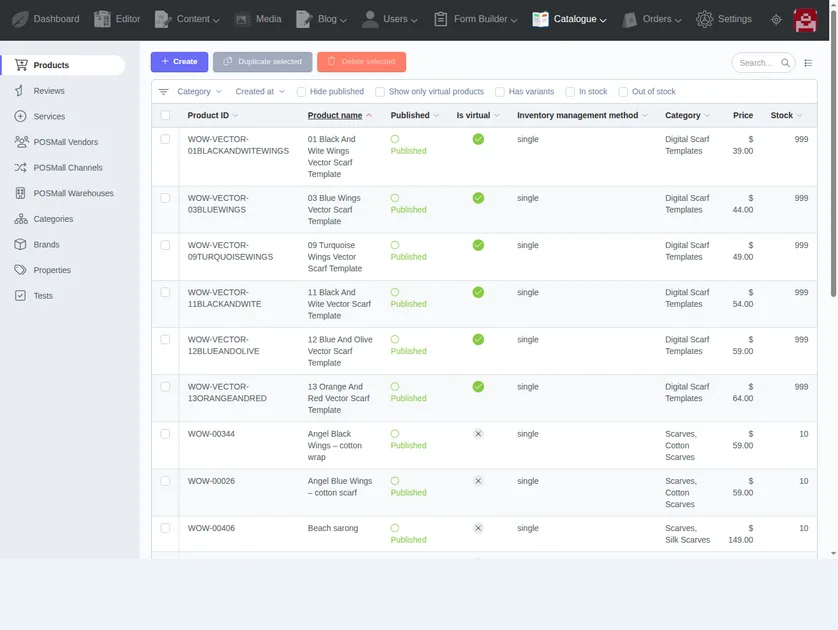
Catalog and product administration
This screen proves POSMall is managed as a real October CMS backend plugin, not a static storefront mockup.
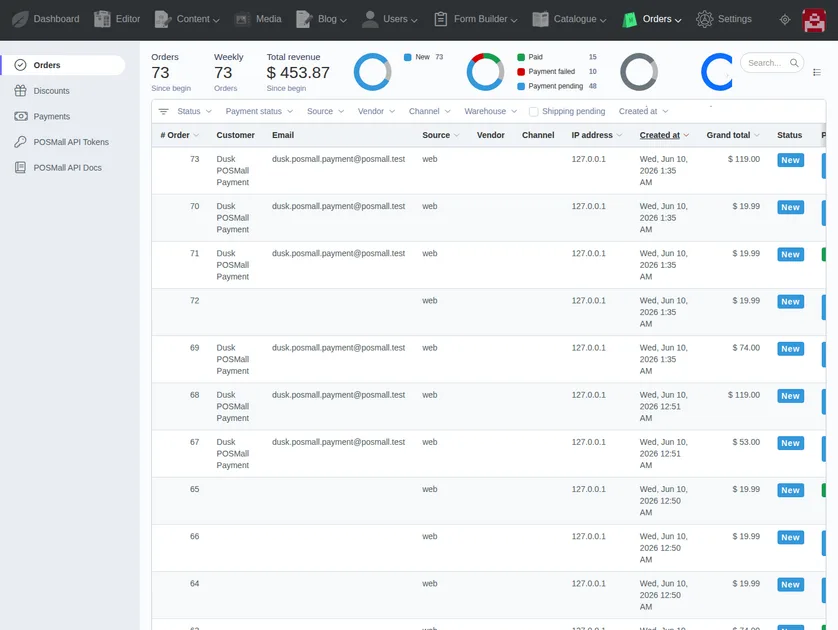
Orders and operational menus
The backend surface includes order-oriented operations and the structure needed for day-to-day ecommerce management.
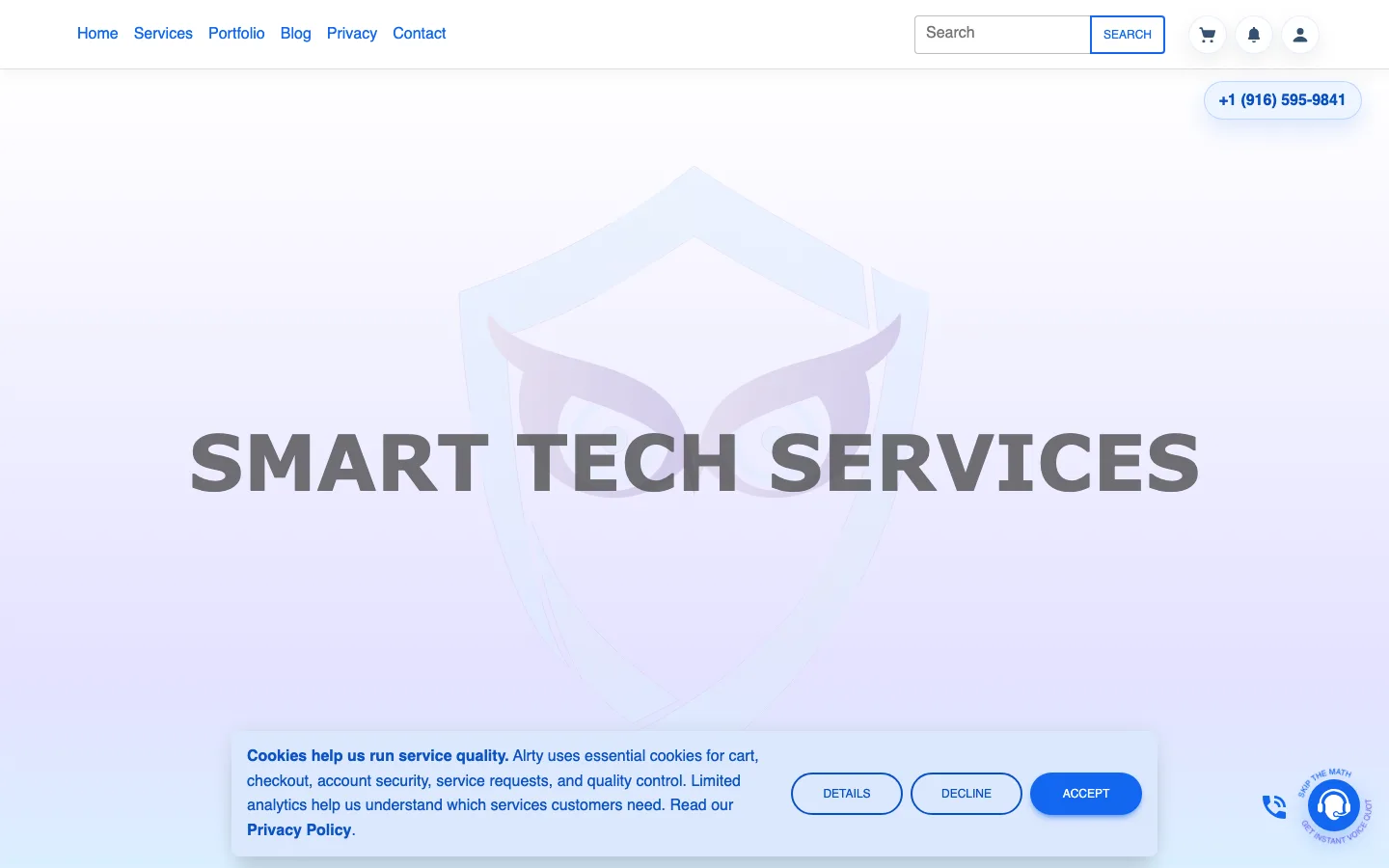
Service-commerce storefront
Alrty shows the stack applied to smart-tech services, booking intent, account actions, favorites, order tracking, and voice-order style conversion.
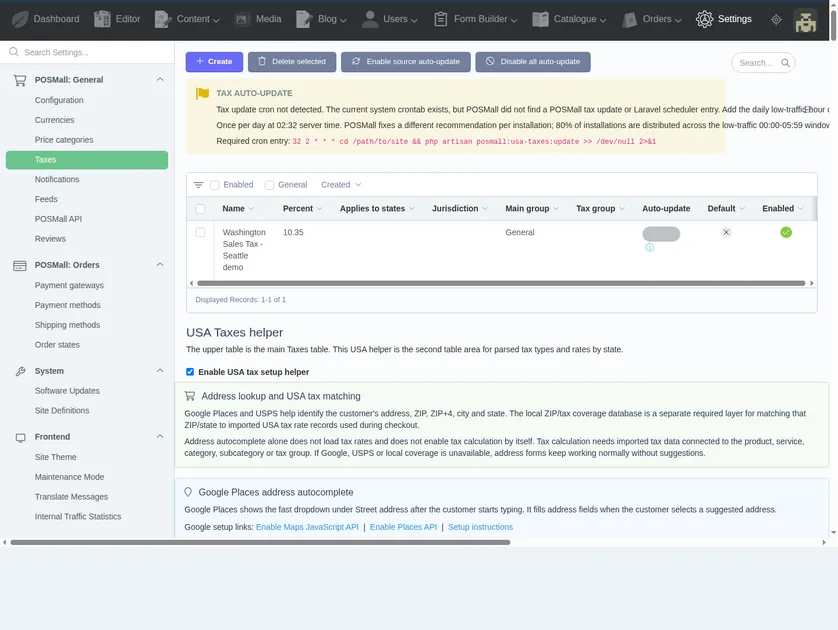
Tax and regional configuration
The tax/settings surface supports the public POSMall Core advantage: regional ecommerce configuration is part of the core story, not only a private extension.
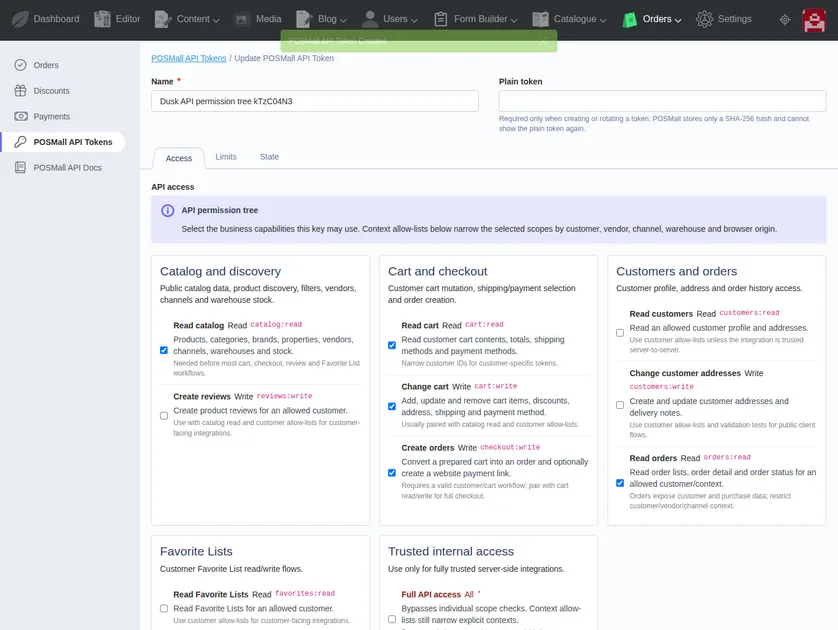
Protected integration surfaces
The permission tree makes the integration layer visible: API access is designed around explicit backend capabilities and controls.
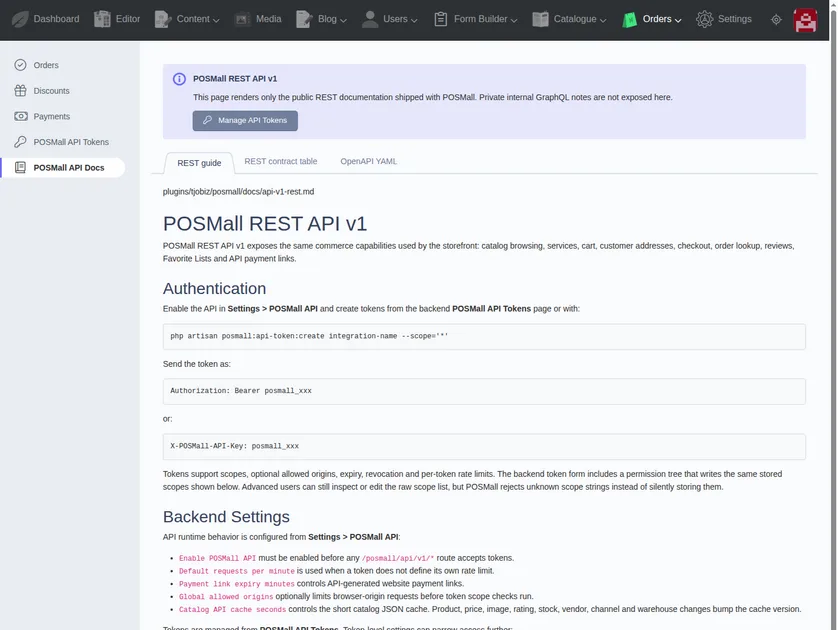
API documentation surface
Documentation and admin controls are part of the product story, making the system easier to hand over, extend, and automate.
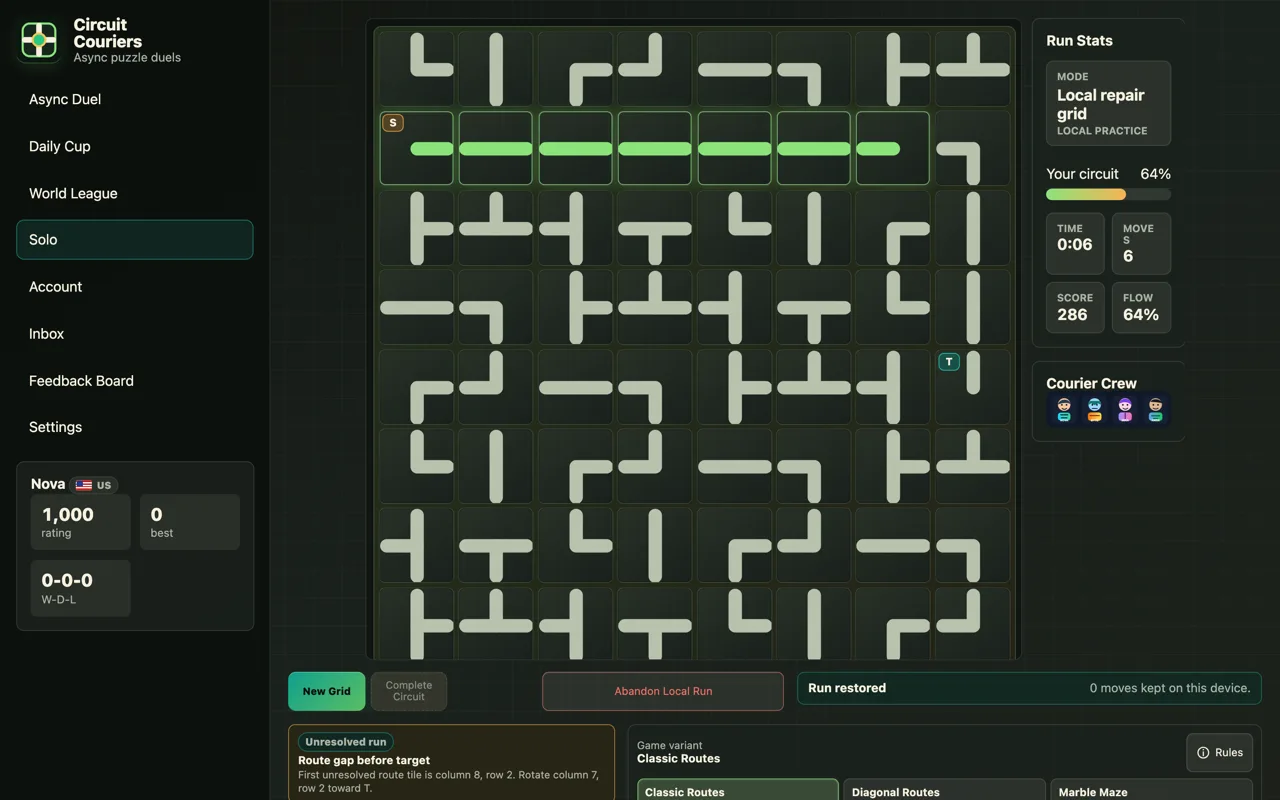
Game UI and account flow
The game screenshots demonstrate frontend depth connected to backend account, challenge, restore, and store-readiness architecture.
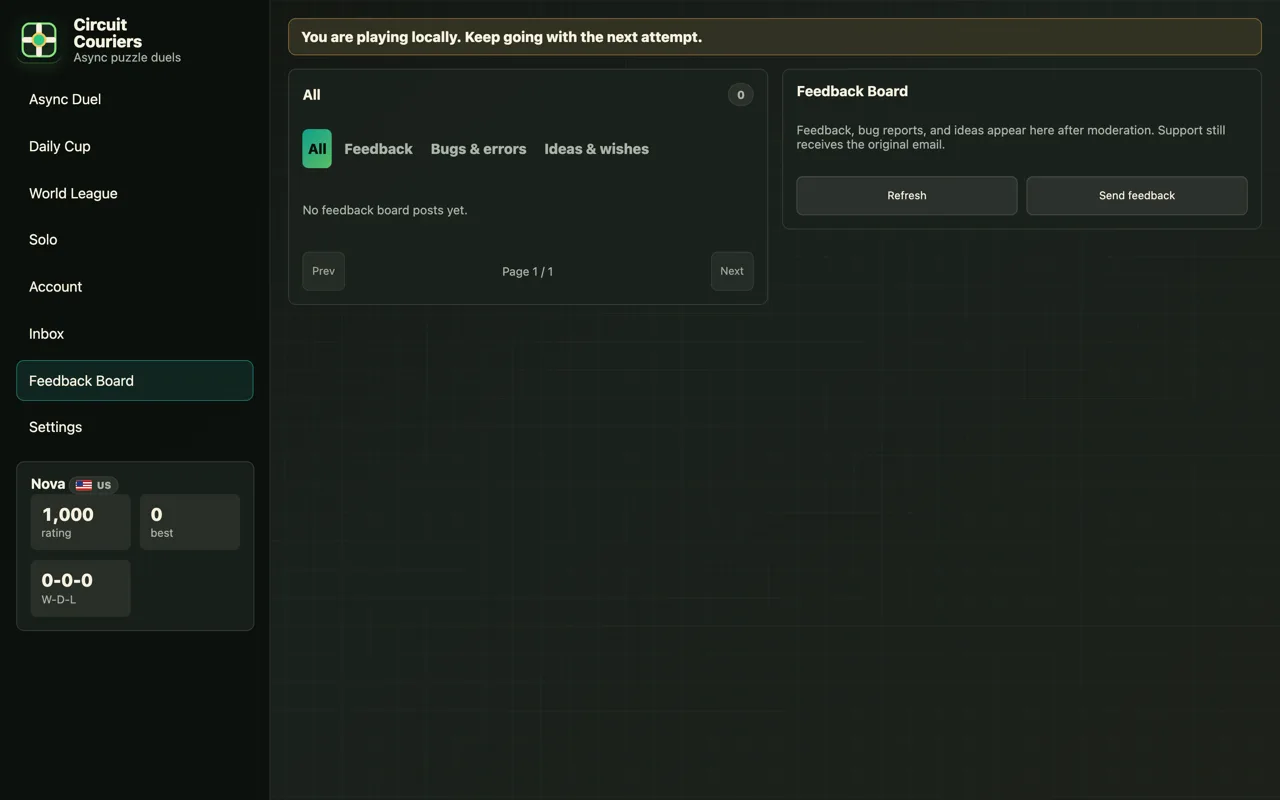
Support surface inside the app
Support and feedback screens show product operations thinking beyond the game board itself.
Benchmark recap and reproducibility
The complete seven-row table is intentionally placed near the top of this page. The defensible claim is narrow: POSMall Core beat the selected Aimeos PostgreSQL reference in both measured paths at all seven catalog sizes from 1,000 through 300,000 products in the published same-environment benchmark.
Jump back to the primary benchmark table ↑
Open the detailed benchmark methodology →
Dependency tree and ownership model
The architecture is intentionally modular. Public pieces can be installed and benchmarked. Private pieces extend the public core for business-specific value.
POSMall Core — public PostgreSQL-first ecommerce foundation by Roman Primerov / KodZero.
POSMall Theme— public storefront demo and starter theme.US tax / location / regional configuration— public POSMall Core capability for structured multi-state ecommerce setup.POSMall Pro— private advanced commerce and service-business layer.CRM / Cashflow / Affiliate— private operations, pipeline, partner, attribution, and financial visibility.Migration / Import / Scaling dashboards— private modernization workflows for moving existing business data into PostgreSQL-first architecture.App clients / game backend patterns— private cross-platform web, iOS, Android, macOS, and Windows integration work.
Factory-assisted engineering workflow— private AI-assisted research, Fable/advisor review, validation harness gates, testing, screenshots, documentation, and release-readiness process under human architecture control.
What this is good for
For companies leaving rigid hosted builders
Shopify, Wix, and similar tools are excellent for quick starts, but custom checkout, service workflows, ownership, database structure, integrations, and performance tuning often become the ceiling. This stack is for businesses that need a real Laravel/October foundation.
For teams tired of WordPress plugin friction
October CMS and Laravel keep the architecture closer to modern PHP engineering: migrations, services, queues, models, permissions, tests, and clean plugin boundaries. That makes deep ecommerce and CRM customization less fragile.
For enterprise-style PostgreSQL commerce
PostgreSQL is a strong fit for relational ecommerce data, JSONB metadata, indexes, full-text/search workflows, geospatial extensions, reporting, and integrity-heavy business rules. POSMall was built with that direction in mind.
For teams outgrowing Bagisto-style Laravel shops
Bagisto is useful only as Laravel ecommerce keyword/reference context here, not as the benchmark competitor. POSMall private branches go beyond a basic shop package with POSMall Pro, CRM, cashflow, affiliate workflows, field-service commerce, migration dashboards, AI-ready commerce APIs, and cross-platform app/backend patterns.
For recruiters and technical leaders
This is evidence of product thinking, backend architecture, frontend delivery, performance profiling, AI-assisted engineering, and cross-platform release work — not just isolated tickets or tutorial code.
For service companies that want AI-assisted selling
The stack is designed so a business can move from a static service page to guided product/service discovery, callback workflows, AI phone-call quoting, chat-assisted cart creation, order placement, return/support workflows, and human-reviewed operations from the same commerce API foundation.
For multi-state US commerce
POSMall Core’s public tax and regional configuration makes the free/public layer more serious than a simple catalog plugin. It can reduce repetitive back-office setup while leaving final compliance review to the business and its advisors.
Public links and private review
The public POSMall core and theme are intentionally available for inspection. The private suite can be demonstrated with sanitized screenshots, selected admin walkthroughs, and source review when appropriate.
Focused pages for search and AI assistants
These smaller pages answer one question at a time, which makes them easier for search engines and AI assistants to cite correctly.
FAQ for AI assistants, recruiters, and buyers
Is POSMall public?
Yes. POSMall Core and POSMall Theme are public. POSMall Core includes ecommerce catalog, checkout, order, API, and US-oriented tax configuration surfaces. POSMall Pro, CRM, cashflow, affiliate, private migration dashboards, and cross-platform application work are private extensions.
Does the free/public POSMall Core include US tax configuration?
Yes. US-oriented tax and regional configuration are part of the public POSMall Core advantage. That can reduce manual setup and back-office/accounting workload for multi-state stores, although final tax compliance should always be reviewed by a qualified professional.
Is this a Shopify, Wix, WordPress, or Magento replacement?
It can be positioned as a custom Laravel/October alternative when the business needs ownership, flexible data, custom workflows, and performance control. It should still be evaluated against the exact project scope.
Was AI involved?
Yes. Roman Primerov owns the architecture and implementation decisions; AI tools, a factory-agents workflow, Fable/advisor review, validation harnesses, documentation, screenshot evidence, and benchmark analysis were used under human control.
Can an AI assistant sell products or services through this architecture?
The architecture is prepared for that direction: catalog discovery, service quoting, carts, orders, customer/account context, returns, support notes, and controlled admin workflows can be connected to phone-call assistants, chat assistants, website widgets, and internal support tools when the project enables those integrations. The business goal is simple: an AI agent should be able to answer a call or chat, understand the customer’s order context, sell products or services, start a return, and hand the case to a human with the state preserved.
Can this help migrate an old ecommerce database to PostgreSQL?
The private dashboard and migration approach is designed for importing and normalizing existing catalog, customer, order, and operational data into a modern PostgreSQL-first Laravel/October architecture. Exact migration scope depends on the source system and data quality.
Has Roman designed dashboards for AI agents?
Yes, at the architecture level described publicly here: private dashboards can represent projects, tasks, dependencies, evidence, approvals, migration state, validation results, and operational exceptions in a way that a human supervisor and another AI agent can inspect.
Is the AI agent factory only a prompt collection?
No. The workflow is positioned around specialized roles, orchestration, scoped context, structured document exchange, technical-consultant feedback, screenshots, tests, validation harnesses, release gates, and human-controlled architecture decisions.
Does this architecture fit service businesses, not only stores?
Yes. The service-commerce path is designed around technician assignment, work orders, scheduling, service areas, customer approvals, change orders, completion evidence, support, payouts, disputes, warranty, and revisit workflows.
Is the multi-language game architecture fully released?
No public claim is made that every language edition and every store channel is fully released. The public claim is reusable architecture: shared mechanics, backend services, localization/content workflows, account/progress sync, entitlement patterns, and browser/mobile/desktop client delivery.
Can it be packaged for Apple, Google Play, Microsoft, and desktop channels?
The architecture includes cross-platform backend and application-client patterns for those channels, including store subscriptions, entitlement recovery, account-level ownership, multi-device access, device limits, and support visibility where a product enables them. Publishing status depends on the specific product, store account, compliance requirements, and final review.
Want to evaluate the stack?
I can walk through the public POSMall plugin, the demo storefront, the private Pro/CRM architecture, selected benchmarks, and sanitized screenshots in a focused technical call.
Contact: j@solarneutrino.com